
Glassware
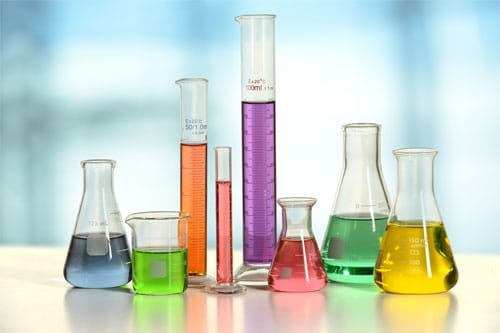
Laboratory glassware comprises specialized, heat-resistant (usually borosilicate) glass instruments used for measuring, storing, heating, and mixing chemical or biological substances. Common types include beakers, flasks (Erlenmeyer, volumetric), burettes, and pipettes, valued for their transparency, durability, and chemical inertness.
Key Types of Laboratory Glassware
- Beakers: Cylindrical, wide-mouthed containers used for holding, mixing, and pouring liquids, typically ranging from 10 ml to 4000 ml.
- Flasks:
- Erlenmeyer Flasks: Conical, narrow-necked, ideal for mixing and boiling solutions without splashing.
- Volumetric Flasks: Used for preparing precise volumes of solutions, featuring a pear-shaped bottom and a calibrated long neck.
- Florence (Boiling) Flasks: Round-bottomed, designed for uniform heating of liquids.
- Graduated Cylinders: Tall, narrow vessels used to measure liquid volumes with reasonable, semi-precise accuracy.
- Pipettes & Burettes: Precision tools for measuring and dispensing specific, small quantities of liquids.
- Test Tubes: Small, cylindrical tubes used for mixing, heating, and storing small amounts of samples.
- Condensers: Used to cool hot vapors or liquids, critical for distillation processes.
- Watch Glass/Petri Dishes: Shallow, round dishes used for evaporating, covering, or culturing.
Properties and Handling
- Material: Usually Borosilicate glass (e.g., Pyrex) for its high resistance to thermal shock.
- Benefits: Highly resistant to chemicals (except hydrofluoric acid), easy to sterilize, transparent.
- Safety: Must be checked for chips or cracks before use to avoid breakage, particularly when heating.